Monday, February 2, 2015

Blogpost 4

A. Rotational and Tangential Velocity

  • Factors of Circular motion
  • Tangential motion
    • Linear speed of something moving in a circle
    • How fast an object with a circular path is moving
    • Usually measured in m/s or km/h
  • Rotational Speed
    •  Also called angular speed
    • Evaluates the number of full revolutions an object does over a period of time
    • On a line from the center of a circle to a point on the outside, all objects on the line will have the same rotational speed
    • If you begin at the center of a table and crawl outwards as it spins the rotational speed will remain the same
  • Tangential speed is directly proportional to rotational speed at any fixed distance from the axis of rotation
  • Examples
    • 2 kids are on a merry go round. One is on the outside and one is on the inside. The one on the outside will have a greater tangential velocity but they both will have the same rotational velocity. This is because the make the same rotations in a period of time but the one on the outside will cover a much greater distance.
    • 2 gears. One large and one small. They will both move one tick at a time, but since one tick is the same distance they will move at the same speed. On the other hand the smaller one will have a greater rotational velocity because it may have 10 ticks and the other has 30. So they move at the same tangential speed but the small one will make 3 full revolutions as the big one makes one.
B. Rotational Inertia
  • The property of an object to resist changes in its rotational state of motion
  • Greater rotational inertia makes it much harder for it to fall or rotate over
  • Something rotating will continue rotation while something not rotating will remain at rest
  • Dependent on mass
    • More specifically mass distribution
    • The further the mass is from the axis of rotation the greater the rotational inertia will be making it harder for the object to rotate
  • Tightrope walkers use long poles to take advantage of this
    • The pole has a great rotational inertia and the longer the pole the harder it would be for them to rotate
  • An object with a high rotational inertia is harder to get sped up, but once they begin rotating they have a tendency to continue rotating
    • A long baseball bat is much harder to swing but it will continue to rotate once it begins to rotate
    • A ring will lose to a solid marble regardless of their mass because a hoop has a great rotational inertia
      • It is much harder to get spinning
C. Conservation of Angular Momentum
  • If no external net torque acts on a rotating system, the angular momentum of that system remains constant
  • With the weights far away from the axis of rotation he moves at a slow speed but when he pulls the weights in close to him, he speeds up
    • Though he goes much faster the angular momentum remains the same
    • If he were to put the weights back out, he'd slow down again
    • Pulling the weights in makes him easier to spin because 
  • Similarly, a diver in the air
    • While flipping divers will sometimes "tuck" 
      • Brings legs in towards chest and curls up with a "cannonball"
      • Allows you to rotate much faster because you decrease your rotational inertia
    • As he goes up he will go slow
    • As he tucks, his rotational speed will increase
    • As he leaves the tuck, his rotational speed will go back down
    • Throughout the entire flip his angular momentum remained the same
D. Torque

  • Rotational counterpart of force
  • Torque causes a rotation or twist of an object
  • Defined as torque= lever arm x force
    • Lever arm is the part of the system that provides leverage
    • The shortest distance between the applied force
  • Torque is directly proportional to both lever arm and force
  • The ratio of effect lever arm an force have on torque is 1:1
    • They have equal effects on torque
  • 2 children on a seesaw
    • One is twice the force as the other
    • The smaller one will need a bigger lever arm so must be further from the center of the seesaw
E. Center of Mass/Gravity

  • Center of Mass
    • CM
    • The average position of all the mass that makes up an object
    • A symmetrical object will have its center of mass directly in the center
    • An irregular object will have its center of mass closer to the bigger side
    • The center of mass doesn't have to touch the object at all
  • Center of Gravity
    • CG
    • Same as CM since mass and weight are proportional
  • The center of mass cannot go beyond the base of support or the object will rotate/fall over
  • This is why athletes are told to crouch and bend their knees.
    • Much harder for them to fall over 
    • Much harder for them to get knocked over
F. Centripetal/Centrifugal Force

  • Centripertal
    • Center seeking
    • Pulls inward toward the center of a circle
    • Tin can whirling on a string, you must keep pulling the string
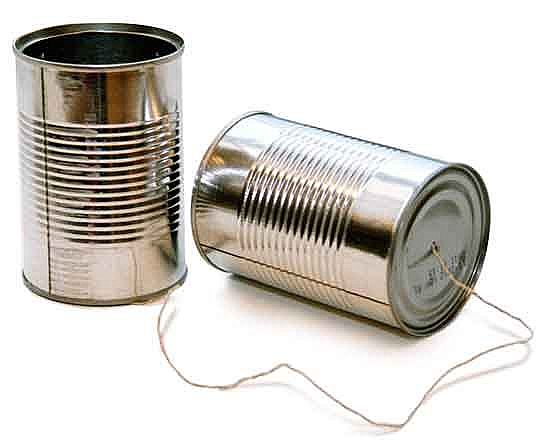
      • String omits the centripetal force
    • Centripetal force depends on the mass of the object
    • Also depends on tangential speed and radius of the circle
  • Centrifugal Force
    • Center fleeing
    • Not real 
    • NEVER THE ANSWER
    • NOT WHAT CAUSES YOU TO KEEP GOING STRAIGHT IN A TURNING CAR
  • Turning car is by properties of inertia
    • Nothing made you stop, so you continued going straight

Friday, January 30, 2015

Meter Stick

Step 1:
A. Gives an example of a meter stick with a torque
Shows that the position of the fulcrum determines whether it will be balanced

B. Shows the meter stick being balanced on the table also showing that if they are balanced there are two equal torques

The center of gravity was very close to the 50cm mark  and the lever arms were then equal at about 50cm

C.We then added the weight to one side of the meter stick. This changed center of gravity therefore we had to change the location of the fulcrum to keep them balanced.

When balancing each side, lever arm and force were inversely proportional. The force on one side went up therefore its lever arm had to decrease to keep both torques equal to each other. On the other side the lever arm went up to balance.

Step 2:

  1. Balance the meter stick
  2. Measure each lever arm
  3. Convert mass of the additional weight that was clamped on to weight
  4. Use three solved variables in the formula for torque and counter torque to solve for the final (force/weight of meter stick)
  5. Convert force of meter stick to mass
Step 3:
Torque= Counter-Clockwise Torque
Lever Arm(A) x Force(A)= Lever Arm(B) x Force(B)
23 x .98= 27 x Force(B)
22.54=27 x Force(B)
Force(B) = 8.348
Mass= 0.0851kg
Mass= 8.51g


The method that I developed worked because all I had to was make calculations and plug them into a formula with one variable. This is what the torque formula allowed me to do. We had the resources to find both lever arms and the mass of the weight added to the side was given. Unless given more information this was the only way to do the problem. When the weight was added and we were told that we had to keep them balanced, you immediately know that the lever arm would have to be increased on the other side so they could have the same torque. 

Wednesday, January 28, 2015

2 Resource Posts


I found this resource helpful because of the examples he provides throughout the video. He begins with a simple definition of center of mass and goes on to give an example that everyone understands and then goes on to explain other examples of where the center of mass on different objects would be. This video also helped me fully understand an object that has a center of mass that doesn't touch the object. The boomerang will have a center of mass and axis of rotation in the center, and will not touch the boomerang. 


This resource was helpful because of its use of diagrams. Each diagram was an explanation of torque and they allowed a person to visualize the ideas literally or conceptually. Regardless of the type of learner you are, you could easily learn torque. 

Monday, December 8, 2014

Unit 3


A. Newton’s 3rd Law and  Action/Reaction Pairs

  • Newton's third law states that every action has an equal and opposite reaction
  • For example, when you walk, you push the ground back and the ground pushes you forward
    • The difference is that the ground has a much greater mass so its acceleration is much less
  • Another example is if you push someone in a chair 
    • You push the chair and the chair pushes back on you
    • The reason you don't move is because you push the ground forward and it pushes you backwards
      • This is similar to the tug of war/horse and buggy
  • Even if nothing is in motion forces are still in action
    • If a book sits on a table the book is pushing the table down and the table is pushing the apple up
    • The book is always being pulled down by the Earth and the apple pulls the Earth up
B. Tug of war/horse and buggy


  • Many people are under the impression that to win a tug of war battle you must pull the hardest
  • This is false
  • We know that from Newton's Third Law every interaction there is an equal and opposite reaction
  • This means that pulling the rope harder just means the other team pulls just as hard
  • The truth is that winning is not based on how hard you pull
    • Rather it is based on how hard you push the ground
  • The person who pushes the ground the hardest will have the ground push them back the hardest, therefore the winner is whoever pushes the ground the hardest
C. Forces in perpendicular directions

  • This is best described by a box sliding down a ramp
  • The weight of the box is caused by gravity and will always be in the downward direction
  • The box pushes up while the ramp pushes down
  • When drawn the vectors will end up in the diagonal direction causing the box to accelerate down the ramp
  • The steeper the box, the greater the acceleration the box will have
  • This can also be seen in someone canoeing across a current going downstream
  • If there is a velocity going down stream and a velocity across the velocity will end up being in the diaganol direction and the person will not canoe straight across
D. Gravity and Tides

  • The force of gravity is increased as the mass of the object increases

    • The more mass an object has, the more it is attracted to other object
  • The force of gravity is defined by the formula: 
  • As mass goes up so does the force
    • They are directly proportional 
  • As distance goes up, the force goes down
    • They are inversely proportional
  • This is why the moon has a larger impact on the tides than the sun does
    • Though the sun's mass is much greater than that of the moon's,the moon is much closer
    • When mass goes up by the same factor that distance does, distance  has the greater impact
    • If mass goes up by a factor of 2, the force doubles
    • If distance goes up by a factor of two. the force goes down to 1/4 of the original force
    • The reason why distance has a greater affect is because it is squared
  • The tides of the Earth are most affected by the moon
  • The force of the moon on one side, and the much less force it has on the other side of the Earth is what causes what is called the tidal bulge
  • The tidal bulge is caused by the moon pulling on side very hard, and very weak on the other side, because they have a greater distance
  • The moon pulls one side hard, the Earth comes over some and then the oceans are spread thin causing the North and South side to have lower 
  • When the moon is on the East side of the Earth, the oceans on the East and West side will be in high tide, and the North and South side will be in low tide
E. Momentum – and Impulse momentum relationship

  • Momentum is a way to describe an object in motion and with relation to the object's mass
  • If two objects are in motion with the same velocity but one with a higher mass, the one with the higher mass will have the higher momentum
  • Momentum is also p
  • p=mv
  • When an object's momentum changes over a period of time, it is called an impulse
  • Impulse is also equivalent to the change in momentum
  • Impulse is J\
  • J is also to be calculated 
  • Impulse is what determines how you hit the airbags 
    • Regardless of how you hit the airbags you will go from moving to not moving
    • The airbags increase the time but impulse will not change
    • The airbags therefore decrease the F
    • The impulse of you hitting the airbags versus hitting the dashboard are the same because the change in momentum is the same:moving to at rest
F. Conservation of Momentum (Including the lab)
  • Within a system we know that momentum is conserved
  • For example, if a 5kg cart is moving at 6m/s and it hits a 1kg cart and stops, it has to have the same momentum as the other cart
      • It will be moving at 30m/s
      • This can also be solved by using M(a)V(a)+ M(b)V(b)= M(a)V(a)+M(b)V(b)
        • 5(6)+1(0)=5(0)+1(x)
        • 30+0=0+x
        • 30=x
    • If the objects stick together then you must use another formula such as M(a)V(a)+M(b)V(b)=M(a+b)V(ab)
      • The ab at the end are not to be multiplied but is to show that the two objects are now one and stick together
    • If the objects in the previous stuck together rather than the first one stopping it would be 5(6)+1(0)=6x
    • 30+0=6x
    • 30=6x
    • x=5m/s

    Monday, November 17, 2014

    Tides Resource Post

    This resource was very useful because of the in depth explanation of each part of tides. He explains the different types of tides (spring and neap), and also depicts when each of them occur. Many animations were used to explain the tides as well as why we have the tidal bulge.  Tides occur because the moon pulls the ocean up towards it and the ocean is then spread thinner causing low tides in the middle, and since Earth is pulled up by the moon also there is high tide on the opposite side. Tides are caused because there is a difference in forces on each side of the Earth. Tides change every 6 hours, so there will be 2 high tides and 2 low tides per day. Tides are very dependent on the moons and its alignment with the sun. When all three of us are lined up, we get spring tides, causing higher high tides and low low tides. On the other hand a neap tide is when we form a ninety degree angle and the sun negates some of the moon's pull on the ocean. This causes low high tides and high low tides. Right now on Fripp Island in South Carolina, they are experiencing a high tide, but in an hour it will be low tide. The moon is approaching a new moon and is currently in its last quarter. 

    November 2014

    DayHigh

    Low
    High

    Low
    High
    PhaseSunriseSunsetMoonriseMoonset
    Sat 0103:10 AM EDT 6.48 ft09:23 AM EDT 0.61 ft03:44 PM EDT 6.85 ft10:05 PM EDT 0.34 ft07:38 AM EDT06:31 PM EDT03:05 PM EDT01:52 AM EDT
    Sun 0203:11 AM EST 6.77 ft09:29 AM EST 0.41 ft03:44 PM EST 6.91 ft10:02 PM EST 0.02 ft06:39 AM EST05:30 PM EST02:46 PM EST01:57 AM EST
    Mon 0304:11 AM EST 7.13 ft10:30 AM EST 0.16 ft04:42 PM EST 7.00 ft10:56 PM EST −0.28 ft06:40 AM EST05:29 PM EST03:26 PM EST03:02 AM EST
    Tue 0405:09 AM EST 7.49 ft11:27 AM EST −0.07 ft05:36 PM EST 7.08 ft11:47 PM EST −0.51 ft06:41 AM EST05:28 PM EST04:06 PM EST04:07 AM EST
    Wed 0506:02 AM EST 7.78 ft12:21 PM EST −0.21 ft06:26 PM EST 7.10 ft06:42 AM EST05:28 PM EST04:48 PM EST05:12 AM EST
    Thu 0612:36 AM EST −0.62 ft06:51 AM EST 7.94 ft01:13 PM EST −0.25 ft07:14 PM EST 7.03 ftFull Moon06:43 AM EST05:27 PM EST05:32 PM EST06:15 AM EST
    Fri 0701:24 AM EST −0.61 ft07:38 AM EST 7.92 ft02:02 PM EST −0.18 ft08:00 PM EST 6.86 ft06:44 AM EST05:26 PM EST06:19 PM EST07:18 AM EST
    Sat 0802:10 AM EST −0.48 ft08:23 AM EST 7.74 ft02:48 PM EST −0.00 ft08:47 PM EST 6.61 ft06:44 AM EST05:25 PM EST07:08 PM EST08:18 AM EST
    Sun 0902:54 AM EST −0.22 ft09:09 AM EST 7.43 ft03:32 PM EST 0.27 ft09:34 PM EST 6.30 ft06:45 AM EST05:25 PM EST07:59 PM EST09:14 AM EST
    Mon 1003:38 AM EST 0.12 ft09:55 AM EST 7.06 ft04:14 PM EST 0.60 ft10:22 PM EST 5.99 ft06:46 AM EST05:24 PM EST08:52 PM EST10:05 AM EST
    Tue 1104:21 AM EST 0.51 ft10:41 AM EST 6.68 ft04:57 PM EST 0.94 ft11:12 PM EST 5.73 ft06:47 AM EST05:23 PM EST09:45 PM EST10:52 AM EST
    Wed 1205:05 AM EST 0.91 ft11:30 AM EST 6.35 ft05:42 PM EST 1.23 ft06:48 AM EST05:23 PM EST10:38 PM EST11:34 AM EST
    Thu 1312:04 AM EST 5.54 ft05:52 AM EST 1.25 ft12:19 PM EST 6.09 ft06:30 PM EST 1.44 ft06:49 AM EST05:22 PM EST11:31 PM EST12:12 PM EST
    Fri 1412:55 AM EST 5.47 ft06:46 AM EST 1.48 ft01:08 PM EST 5.92 ft07:22 PM EST 1.51 ftLast Quarter06:50 AM EST05:21 PM EST12:48 PM EST
    Sat 1501:46 AM EST 5.49 ft07:44 AM EST 1.56 ft01:57 PM EST 5.83 ft08:15 PM EST 1.44 ft06:51 AM EST05:21 PM EST12:24 AM EST01:22 PM EST
    Sun 1602:36 AM EST 5.62 ft08:42 AM EST 1.49 ft02:47 PM EST 5.80 ft09:05 PM EST 1.26 ft06:52 AM EST05:20 PM EST01:16 AM EST01:55 PM EST
    Mon 1703:28 AM EST 5.83 ft09:37 AM EST 1.30 ft03:38 PM EST 5.85 ft09:53 PM EST 1.01 ft06:52 AM EST05:20 PM EST02:09 AM EST02:27 PM EST
    Tue 1804:19 AM EST 6.11 ft10:29 AM EST 1.04 ft04:29 PM EST 5.95 ft10:40 PM EST 0.71 ft06:53 AM EST05:19 PM EST03:03 AM EST03:01 PM EST
    Wed 1905:08 AM EST 6.44 ft11:18 AM EST 0.75 ft05:18 PM EST 6.10 ft11:25 PM EST 0.42 ft06:54 AM EST05:19 PM EST03:59 AM EST03:37 PM EST
    Thu 2005:53 AM EST 6.77 ft12:06 PM EST 0.46 ft06:04 PM EST 6.25 ft06:55 AM EST05:19 PM EST04:56 AM EST04:15 PM EST
    Fri 2112:10 AM EST 0.15 ft06:37 AM EST 7.06 ft12:53 PM EST 0.20 ft06:48 PM EST 6.37 ft06:56 AM EST05:18 PM EST05:54 AM EST04:58 PM EST
    Sat 2212:56 AM EST −0.07 ft07:19 AM EST 7.26 ft01:40 PM EST 0.00 ft07:32 PM EST 6.43 ftNew Moon06:57 AM EST05:18 PM EST06:54 AM EST05:46 PM EST
    Sun 2301:42 AM EST −0.23 ft08:03 AM EST 7.36 ft02:27 PM EST −0.13 ft08:18 PM EST 6.42 ft06:58 AM EST05:17 PM EST07:53 AM EST06:39 PM EST
    Mon 2402:29 AM EST −0.32 ft08:49 AM EST 7.36 ft03:13 PM EST −0.18 ft09:06 PM EST 6.36 ft06:59 AM EST05:17 PM EST08:51 AM EST07:36 PM EST
    Tue 2503:16 AM EST −0.31 ft09:38 AM EST 7.26 ft04:01 PM EST −0.15 ft09:58 PM EST 6.28 ft07:00 AM EST05:17 PM EST09:46 AM EST08:38 PM EST
    Wed 2604:06 AM EST −0.20 ft10:32 AM EST 7.10 ft04:50 PM EST −0.06 ft10:55 PM EST 6.22 ft07:00 AM EST05:17 PM EST10:36 AM EST09:41 PM EST
    Thu 2704:58 AM EST −0.01 ft11:29 AM EST 6.92 ft05:44 PM EST 0.06 ft11:56 PM EST 6.23 ft07:01 AM EST05:16 PM EST11:23 AM EST10:46 PM EST
    Fri 2805:56 AM EST 0.21 ft12:29 PM EST 6.75 ft06:42 PM EST 0.13 ft07:02 AM EST05:16 PM EST12:06 PM EST11:50 PM EST
    Sat 2912:57 AM EST 6.32 ft07:01 AM EST 0.38 ft01:27 PM EST 6.60 ft07:42 PM EST 0.10 ftFirst Quarter07:03 AM EST05:16 PM EST12:47 PM EST
    Sun 3001:56 AM EST 6.48 ft08:09 AM EST 0.42 ft02:25 PM EST 6.48 ft08:42 PM EST −0.03 ft07:04 AM EST05:16 PM EST01:26 PM EST12:54 AM EST

    Thursday, November 6, 2014

    Resource Post

    This video helped me understand Newton's Third Law much better because the professor did several examples in everything he explained, and also asked questions as to why certain things happened. It allowed me to visualize each concept and see why things happened. For example, leaning on the table standing versus leaning on the table on a skateboard. He has each of his objects handy and didn't have to waste anytime to get them out. He was efficient in explaining and got a lot done in a short amount of time. At the same time, this isn't always the best route because often times students are confused and it'd be easier to slow down for those who didn't catch everything he says. Plus they wouldn't have to backtrack if someone was lost. This is a college course, but looking in as a high school student, this is a different way of teaching.

    Monday, October 27, 2014

    Unit 2

    A. Newton's Second Law
    • Can be defined as a=f/m
      • This is the same as a=f*/(1/m) 
    • Describes the relationship between acceleration and mass and the relationship between acceleration and force
      • Force is directly proportional to acceleration
        • This means that as force goes up acceleration goes up
      • Mass is indirectly proportional to acceleration
        • This means that as mass goes up acceleration goes down


    B. Newton's Second Law Lab
    • In the first lab we manipulated the mass of the system by adding mass to the cart an leaving the force/mass of the hanger the same
    • As mass increased, the acceleration went down
    • When we graphed the line of the data we gathered, we found the slope to be .468 
    • The force from the hanger was .5N 
    • The reason why they are so close is because the force was the constant so it will also be the slope of the line